Wondering if a townhome in Gwinnett County could give you the easier lifestyle you want without giving up location, style, or value? You are not alone. For many buyers, townhomes offer a practical middle ground between a detached house and a condo, especially if you want less exterior upkeep and a more streamlined day-to-day routine. This guide will help you understand what low-maintenance townhome living really means in Gwinnett County, what to watch for in HOA documents, and how to shop with confidence. Let’s dive in.
What Low-Maintenance Really Means
Low-maintenance does not mean no maintenance. In many Gwinnett County townhome communities, the appeal is that you may have less responsibility for exterior tasks while the homeowners association manages certain shared elements and community upkeep.
That said, there is no single countywide standard for what the HOA covers. Gwinnett County explains that HOAs are private organizations under state law, and each community’s recorded declaration determines the rules, maintenance obligations, and shared responsibilities. In one neighborhood, dues may include more exterior care. In another, owners may handle more on their own.
Why Townhomes Matter in Gwinnett
Townhomes are a significant part of the Gwinnett market, and they cover a wide price range. Georgia MLS reported a Gwinnett County median sales price of about $420,000 in May 2026, while Zillow placed the county home value index at $410,908 and noted homes were pending in around 30 days as of May 31, 2026.
Townhomes also make up a large and varied segment of available inventory. Realtor.com search results showed 911 townhome listings in Gwinnett County, with examples ranging from the low $200,000s to the mid $500,000s, and builder starting prices around $344,900. That range tells you something important: townhomes in Gwinnett are not one-size-fits-all.
How HOAs Shape the Experience
If you are drawn to low-maintenance living, the HOA is a big part of the story. Gwinnett County describes HOAs as organizations where members pay fees and share the benefits and liabilities of mutually owned property, which can range from entrance features to recreation facilities.
HOAs can also enforce covenants, maintenance rules, and aesthetic standards that are more restrictive than city or county ordinances. That means your community may regulate things like exterior changes, parking patterns, or visible storage, even if the property would otherwise comply with local government rules.
What HOA Dues May Cover
Many buyers focus on the monthly amount first, but the better question is what that amount actually includes. Under Georgia’s Property Owners’ Association Act, common expenses can include both association spending and reserve funding.
In plain terms, HOA dues may support more than what you can see from the street. Landscaping, shared lighting, common-area maintenance, exterior elements, trash service, gates, or reserve contributions may all be part of the picture, depending on the community.
Why Reserve Funding Matters
Reserve funding is easy to overlook, but it can affect your long-term costs. Since Georgia law includes reserve funding within common expenses, it is smart to ask whether the community is setting money aside for future repairs and capital needs.
A community with a clear reserve plan may be better prepared for larger projects over time. If reserves are weak, owners could face added pressure if major work comes up.
Special Assessments and Liens
You should also understand how dues affect ownership and resale. Under Georgia law, lawfully assessed HOA amounts are the owner’s personal obligation and can become a lien on the lot.
That makes unpaid assessments a real issue at closing. Georgia law also requires the association to provide a statement of past-due amounts within five business days after a qualifying written request, which matters when a home is being sold or refinanced.
County Rules Versus HOA Rules
One of the biggest sources of confusion for buyers is the difference between government code enforcement and HOA enforcement. In unincorporated Gwinnett, county code enforcement handles county ordinance issues, but it does not enforce HOA covenants or violations inside city limits.
This matters because a home can be county-compliant and still violate HOA rules. For example, Gwinnett identifies common county issues in unincorporated areas such as exterior building and fence maintenance, parking, and outdoor storage. The county also states that commercial vehicles may not be parked outside homes, apartments, or other residences in unincorporated Gwinnett.
Before you buy, it helps to know whether the townhome community is inside a city or in unincorporated Gwinnett. That can change which local rules apply beyond the HOA’s own standards.
What Newer Gwinnett Townhomes Often Look Like
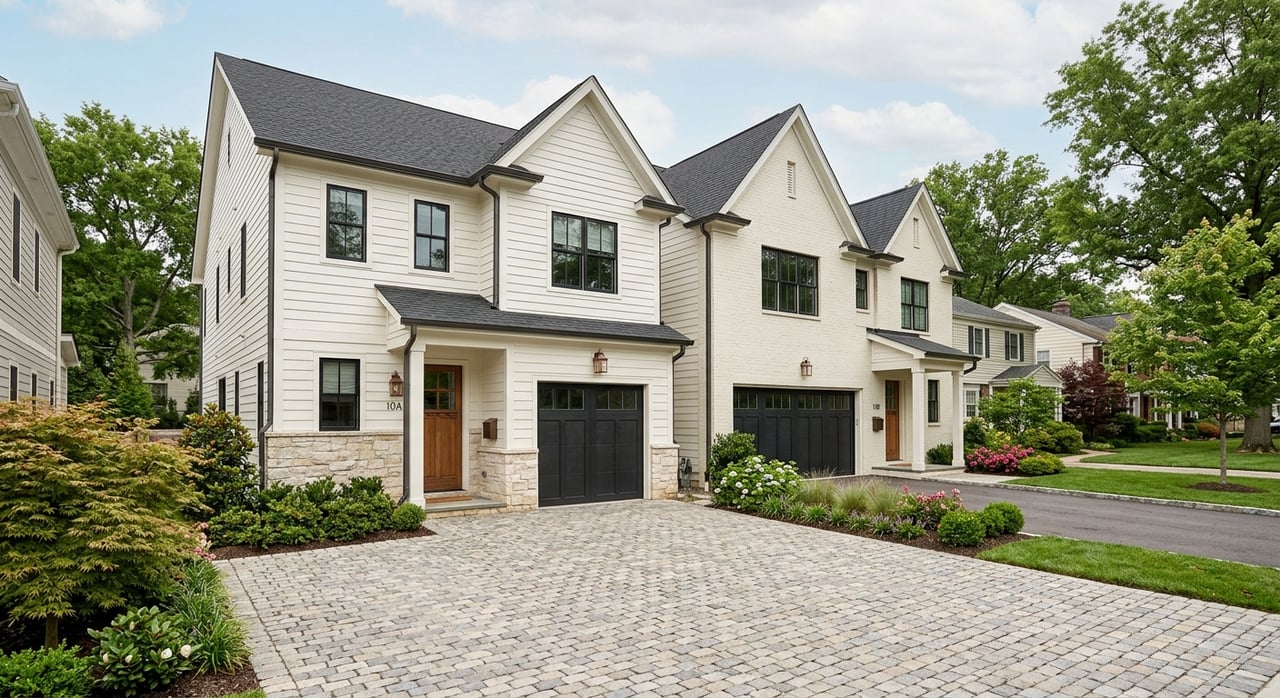
If you tour newer townhome communities, you may notice some common design patterns. Gwinnett’s current townhouse standards for newer development require features such as at least a one-car garage, direct pedestrian connections to sidewalks, a usable front porch, guest parking at 0.25 spaces per unit, and at least 50 feet of external road frontage.
Rear-loaded plans must also include a continuous three-foot walkway. These standards help explain why many newer Gwinnett townhome communities feel more walkable, more compact, and less lawn-intensive than many detached-home neighborhoods.
Parking and Guest Access
Parking can have a major impact on daily life in a townhome community. Even when a home has its own garage, guest parking and vehicle restrictions can still shape how comfortable the setup feels for you and your visitors.
That is why it is worth asking how many guest spaces are available per unit and whether work trucks or commercial vehicles are allowed. A layout that looks fine during a quick showing may feel very different once you factor in household routines and guest visits.
Amenities Can Vary Widely
Not every townhome community offers the same lifestyle package. Gwinnett County notes that HOA-managed shared property can range from simple entrance signage to recreation facilities.
So if you are comparing communities, do not assume the dues buy the same experience everywhere. One neighborhood may focus on basic maintenance, while another may include broader shared amenities and services.
Questions to Ask Before You Buy
A townhome can be a smart fit, but only if the maintenance setup matches your expectations. During a showing or due diligence period, keep your questions specific.
Here are some of the most important ones to ask:
- What exactly does the HOA maintain, such as roofs, exterior paint, landscaping, driveways, trash service, gates, or recreation areas?
- Does the answer match the recorded declaration and budget?
- Is the community inside a city or in unincorporated Gwinnett?
- How much guest parking is available per unit?
- Are commercial vehicles or work trucks allowed?
- Do exterior changes require written approval?
- Are rentals limited?
- Is there a clear reserve funding plan?
- Has the community had any special assessments?
These questions can help you avoid surprises and compare communities more accurately.
Resale Signals Worth Watching
Even if you are buying for your own use, resale still matters. A well-run townhome community often shows itself in practical ways.
Positive signs may include clear maintenance responsibilities, visible upkeep of common areas and exteriors, adequate guest parking, and a transparent HOA budget. On the other hand, vague maintenance rules, repeated parking conflicts, or signs of deferred exterior care deserve a closer look before you make an offer.
Is a Gwinnett Townhome Right for You?
If you want a home that may reduce some exterior responsibilities while keeping you in a large, active Gwinnett market, a townhome can be a strong option. The key is understanding that low-maintenance living is not identical from one community to the next.
The best fit depends on your budget, your parking needs, your comfort with HOA rules, and how much flexibility you want over the home’s exterior and long-term use. When you know what to ask and what to compare, you can shop with much more confidence.
If you are exploring townhomes in Gwinnett County and want hands-on guidance, local insight, and clear communication from start to finish, connect with Liliana Mcgaughey for personalized support.
FAQs
What does low-maintenance townhome living mean in Gwinnett County?
- It usually means less exterior responsibility and more HOA-managed upkeep, but the exact split of responsibilities depends on each community’s recorded declaration.
What do HOA dues usually cover in a Gwinnett County townhome community?
- HOA dues may cover shared maintenance, community expenses, and reserve funding, but what is included varies by neighborhood and should be confirmed in the budget and declaration.
Why should buyers ask about reserve funding in a Gwinnett County HOA?
- Reserve funding matters because Georgia law includes it in common expenses, and it can affect how prepared the community is for future repairs and major projects.
Can a Gwinnett County property follow county rules but still break HOA rules?
- Yes. A property may comply with county ordinances and still violate HOA covenants or aesthetic standards, since HOAs can enforce stricter rules.
What parking questions should buyers ask in a Gwinnett County townhome community?
- You should ask about garage setup, guest parking availability, and whether commercial vehicles or work trucks are allowed.
Are all Gwinnett County townhome communities the same?
- No. Townhome communities in Gwinnett vary widely in price, age, layout, parking, amenities, and HOA services, so each one needs to be evaluated on its own.