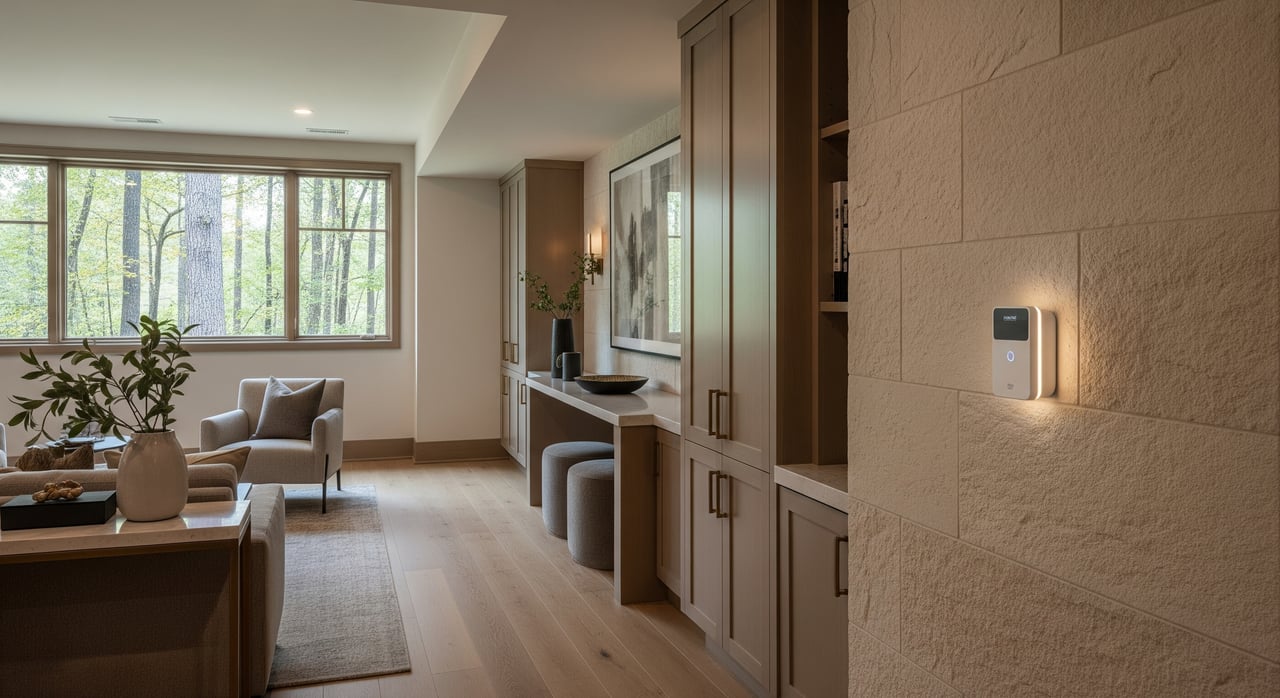
If you are buying, selling, or finishing a basement in Fulton County, there is one invisible factor that can impact health and negotiations: radon. You want clean indoor air and a smooth closing, and you do not want surprises late in the process. In this guide, you will learn what radon is, why testing matters in Fulton County, how to test correctly, what your results mean, and how mitigation typically works during a sale. Let’s dive in.
Radon basics you should know
Radon is a colorless, odorless radioactive gas that forms naturally from uranium in soil and rock. It can enter your home through small cracks, gaps, sump pits, and utility openings in the foundation. Testing is the only way to know your level.
According to the U.S. Environmental Protection Agency, the action level for indoor radon is 4 picocuries per liter (pCi/L). If your test reads 4 pCi/L or higher, mitigation is recommended. Risk increases with both concentration and time of exposure. You can learn more from the EPA radon overview.
Why Fulton County homes should test
Fulton County sits within North Georgia’s Piedmont region, where crystalline bedrock like granite, gneiss, and schist can contain trace uranium that produces radon. Soil permeability and bedrock fractures can allow radon to move into buildings. The USGS background on radon geology explains how local rock and soil influence radon potential.
Here is the key point for you: radon varies a lot from house to house, even on the same street. County maps, like the EPA Radon Zone Map, provide screening guidance, not a prediction for your specific home. That is why testing every house is smart, especially if you spend time in a basement or the lowest level.
In Fulton County, you will see a mix of foundations: slab-on-grade, crawlspaces, and both finished and unfinished basements. High readings are most common in the lowest lived-in level, but elevated levels can occur in any foundation type. Testing confirms your unique conditions so you can act with confidence.
How to test a basement the right way
Choose short-term or long-term
- Short-term tests (2 to 7 days) are the most common during real estate deals. Options include charcoal canisters, electret ion devices, or professional continuous radon monitors.
- Long-term tests (90 days or more), such as alpha-track devices, provide a better estimate of your annual average by capturing seasonal swings.
- Professional continuous radon monitors record hourly readings and are widely accepted when operated by a certified tester, especially useful for transactions and follow-up checks.
Place the device and prep correctly
To get credible results, follow well-established testing protocols:
- Test the lowest level where people spend at least two hours per day. In many Fulton homes, that is the basement if it is finished or used regularly. Otherwise, test the lowest lived-in level.
- Maintain closed-building conditions for 12 hours before and during a short-term test. Keep windows and exterior doors closed as much as possible, except for normal entry and exit.
- Place the device 20 inches or more above the floor, away from exterior doors, windows, vents, direct sunlight, high humidity areas, and heat sources.
- For real estate transactions, use kits processed by a state-certified or EPA-recognized lab, or hire a certified measurement professional. Chain-of-custody and proper device handling matter for credible results. The Georgia Department of Public Health radon program and the NRPP directory of certified radon pros are good places to start.
Understand your results
- 4.0 pCi/L or higher: Mitigation is recommended.
- 2.0 to 3.9 pCi/L: Consider mitigation or confirm with additional testing, preferably long-term.
- Below 2.0 pCi/L: Generally low, but periodic retesting, especially after renovations or foundation work, is a smart idea.
In a home sale, a short-term test is typical. If that result is elevated, a confirmatory test with a continuous monitor or a follow-up long-term device provides more clarity before final decisions.
If levels are high: what works and what it costs
Effective mitigation methods
The most reliable approach for basements and slabs is active sub-slab depressurization. A fan draws soil gas from beneath the slab and vents it safely outdoors. For crawlspaces, a sealed membrane with sub-membrane depressurization is commonly used. Sealing visible cracks and sump lids helps, but sealing alone is rarely enough for long-term reduction.
System design should be tailored to the house by a certified mitigation professional who completes diagnostic testing and sizes components correctly. Professional standards and guidance are available through AARST.
Typical cost and performance
For most single-family homes, mitigation commonly ranges from about 800 to 2,500 dollars, depending on size, foundation type, and system complexity. Properly designed systems usually reduce radon by 90 percent or more and often bring levels well below 4 pCi/L.
Request written estimates from multiple certified mitigators and check references. Ask about fan location, noise, aesthetics, and warranty.
Verify the fix
Post-mitigation testing is essential to confirm performance. Many pros use a short-term continuous monitor after installation. Keep all reports for your records. You can verify credentials through the NRPP directory of certified radon pros and review best practices via AARST standards.
Radon and your real estate timeline
Sellers: test before you list
Pre-listing testing lets you address issues up front and avoid last-minute delays. If results are elevated, obtain two to three written estimates from certified mitigators and either complete mitigation before listing or disclose results with a clear plan. Keep all documentation, including test reports, system design, receipts, and verification results. This transparency builds buyer confidence.
Buyers: add a radon contingency
During your inspection period, order a short-term test with a certified professional or lab kit and maintain chain-of-custody. If results exceed the agreed action level, common options include seller-paid mitigation, a price credit, or, if allowed by the contract, cancellation. Confirm local practices with your real estate professional and attorney.
Keep the schedule realistic
Short-term testing takes 2 to 7 days. Allow time for confirming results, collecting estimates, and scheduling mitigation. Many Atlanta-area inspection contingencies run 7 to 15 days, so start radon testing right after contract ratification. Clear timelines reduce stress for both sides.
Quick checklists for Fulton County
Sellers
- Consider pre-listing testing with a certified pro or EPA-recognized lab.
- If elevated, get 2 to 3 mitigation quotes and complete mitigation or disclose a plan.
- Keep documentation: test reports, design details, invoices, and post-mitigation results.
Buyers
- Include a radon testing contingency or request recent seller results.
- Use a certified measurement professional and maintain chain-of-custody.
- If elevated, negotiate mitigation or a credit and verify performance after installation.
Both parties
- Test the lowest lived-in level and follow the device instructions closely.
- Retain all records: lab reports, chain-of-custody forms, proposals, and verification tests.
- Choose credentialed pros. Check the NRPP directory of certified radon pros and consult the Georgia Department of Public Health radon program for state guidance.
The bottom line for Fulton basements
Radon is common, invisible, and manageable. With proper testing and, if needed, a well-designed mitigation system, you can protect indoor air and keep your transaction on track. If you are planning to list or buy a home with a basement in Fulton County, set up radon testing early so you have time to address results and avoid delays.
Have questions about how radon testing fits into your timing, inspection strategy, or negotiation plan? Reach out to Unknown Company for clear guidance and hands-on coordination with your lender and inspection team. Prefer to talk in Spanish? We are bilingual and ready to help.
FAQs
Do all Fulton County homes need radon testing?
- Yes. Regional geology and house-to-house variability make testing the only way to know your level, regardless of foundation type.
If my neighbor’s radon test was low, should I still test my home?
- Yes. Radon can vary significantly over short distances due to differences in soil, bedrock, and construction details.
How long does a typical radon mitigation installation take?
- Most standard systems install in one to two days, though scheduling and any needed repairs can extend timelines.
Will a radon system affect my HVAC or create noise?
- Properly designed systems are minimally intrusive; discuss fan placement and noise expectations with the mitigator before installation.
How do I find certified radon testers and mitigators in Georgia?
- Verify credentials through the NRPP directory of certified radon pros and consult the Georgia Department of Public Health radon program for state resources.